


Herniation of intervertebral discs occurs more often with age-related osteochondrosis due to dryness and fragility of the fibrous ring.But this is only one of the risk factors.Others include:
- Heavy load on the lumbar region due to excess body weight.
- Muscle weakness.
- Inheritance.
- A sedentary lifestyle and, consequently, constant compression of the vertebral structures.
- Smoking.
- Great physical activity.
According to medical statistics, this disease occurs several times more often in men than in women.
What are the most common causes of the disease:
- Injuries from car accidents or falls.
- Lifting heavy objects with improper load distribution.
- Scoliosis or lordosis, which leads to increased stress on certain areas of the spine.
- Hip dysplasia.
- Chronic diseases, including spinal tuberculosis, neoplasms, syphilis.
- Metabolic disorders (hereditary and acquired).
All of these factors cause the cartilage and bones of the spine to wear and weaken.And this is the main cause of intervertebral hernia.
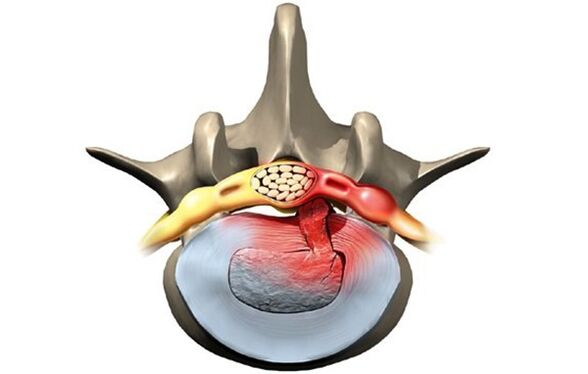
Stages of development of the disease
Without proper treatment, the disease progresses and the condition of the damaged spinal discs worsens.There are four stages of development of the disease:
- Prolapse.The intervertebral disc has moved quite a bit, no more than two millimeters.The nucleus pulposus does not protrude beyond the vertebral body.
- Lumbar protrusion.The edge of the disc extends beyond the spinal body for a maximum distance of 1.5 mm, but no displacement of the nucleus is observed.
- Extrusion.The nucleus protrudes beyond the vertebral body.
- Seizure.The nucleus practically falls and hangs on the teardrop-shaped vertebra.In this phase there is a risk of breaking the fibrous ring and leakage of liquid secretion.
In the first stage of the disease, almost nothing bothers a person;sometimes there is pain in the lower back, but it passes quickly.As the disease progresses, the state of health also worsens, the symptoms become more painful and alarming.If the diagnosis is not made in time and treatment is not started, the consequences are possible: paralysis of the legs and serious disorders of the nervous system.
How does lumbosacral hernia manifest itself?
An intervertebral hernia can manifest itself with the following symptoms:
- Pain in the lumbar region.
- Pain when walking, radiating to the thigh area.
- Numbness in the feet, toes, areas on the surface of the lower leg and thigh.
- Feeling of heaviness in the legs.
- Rigidity of movements.
In order not to delay seeking medical help, it is worth analyzing the symptoms of the disease more carefully.They can be divided into three groups.
Pain syndrome
Pain with a hernia of the lumbosacral spine is a key symptom.Even in the first stage, pain is felt in the area of the damaged disc, especially after an injury.They can intensify or subside, and then rise again.In most cases, the sacral region does not even hurt, but it hurts, especially during physical activity or prolonged sedentary work.If a person lies on his healthy side and bends his leg, the pain disappears completely.This condition can last for several months.
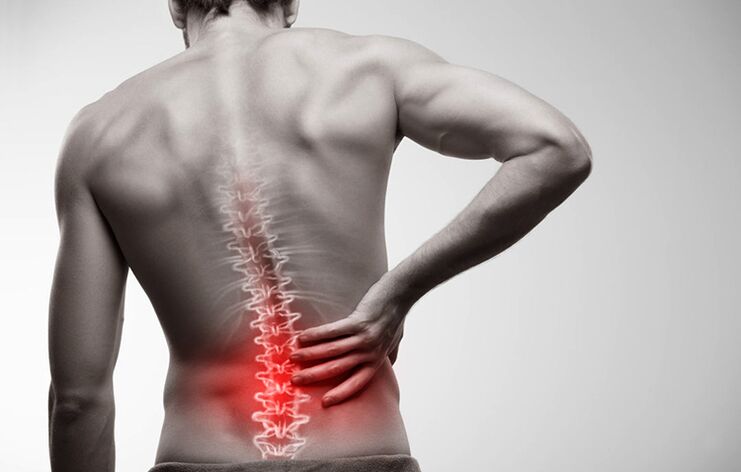
If you seek medical attention promptly, it is not difficult to eliminate the problem.Just say goodbye to bad habits and follow the physical therapy recommended by your doctor.
Every day the affected area will increase and the condition of the disc tissue will worsen.The transition to the second stage of the disease is signaled by increased pain.Now it is not only felt in the sacral region, but covers the entire lower back, radiating to the cervical region, each spinal muscle, the buttocks, thighs, legs, feet and toes.The discomfort occurs with physical activity, even minor: coughing or sneezing.
Spinal syndrome
Increasing pain in the second stage is accompanied by constant spasms of the back muscles.This leads to even greater discomfort for the patient.He cannot move freely, straighten his back or stretch.The gait of such a person becomes uncertain, he constantly leans in the direction opposite to the patient and stoops.
Due to impaired coordination of movements, a person's quality of life deteriorates.He cannot perform the tasks assigned to him at work well, and active rest becomes unrealistic due to constant pain.
Radicular syndrome
If the hernia is left unattended by doctors, the progressive disease leads to compression of the spinal roots, as a result of which they die, and blood access to the tissues of the damaged disc is almost impossible.Symptoms characteristic of severe stages of the disease appear:
- Weakening of the leg muscles.The patient cannot squat, reach or jump.It is difficult for him to even climb stairs.
- Numbness of the affected area and nearby areas.The skin becomes numb and pale, a sensation of goosebumps and tingling appears.Patients complain of hyperhidrosis in the painful area and legs or, conversely, excessive dryness of the skin.
- Lumbago.The patient suffers from stitches in the lumbar region with sharp, sharp pain, which intensifies with any movement.Without treatment, it leads to destruction of the hip and knee joints.
- Noticeable thinning of the affected leg, leading to asymmetry of posture.
- Destruction of the pelvic organs.Urological and gynecological disorders worsen, libido disappears, diarrhea and urinary incontinence are possible.
In severe cases of spinal hernia there is a risk of paralysis, disability and even death.
Pathology diagnosis
If a person has severe lower back pain, he should make an appointment with a neurologist.He will carry out an examination with medical tests:
- Detection of reflexes from lower limb tendons.
- Leg raise test.
- Determination of sensitivity to hot or cold, pain and vibrations in the legs, thighs, buttocks, abdomen and back.
Next, the doctor will refer the patient for an MRI or CT scan of the lumbar region.Using tomographic techniques, a three-dimensional image of the affected area will be obtained.It can be used to determine the location and size of the hernia and the stage of the disease.
If there is a risk of damage to the spinal cord, electromyography, neurography and contrast myelography are additionally prescribed.With the help of these studies, the doctor will determine whether urgent surgery is needed.
Treatment of intervertebral hernia
Spinal hernia is treated using both conservative and surgical methods.The choice of technique depends on the stage of development of the disease, the presence of concomitant diseases and contraindications.
Conservative therapy
The therapeutic course is aimed primarily at relieving pain and alleviating the patient's condition.
What drugs can a doctor prescribe:
- Medicines that relieve pain and inflammation.In case of exacerbation - in the form of injections.When acute pain is relieved (usually three to four days is enough), oral drugs with a similar effect are prescribed.
- Novocaine blocks with the addition of corticosteroids.This method can relieve pain for two weeks at once.Usually a course of blocks is carried out with injections in different areas of the damaged disk.
- Centrally acting muscle relaxants.They reduce muscle activity, relieving painful spasms.
- Vitamin and mineral complexes with particular attention to elements of group B. They slightly relax muscles, help tissue regeneration and conduction of nerve impulses.
After pain relief, the use of medications is reduced.The disease is treated through physical therapy and physiotherapy.
Physiotherapeutic treatment methods are also selected based on the patient's condition.Could be:
- Treatment with heat or electric current.
- Electrophoresis with anti-inflammatory drugs.
- Acupuncture and acupressure.
- Hirudotherapy.
- Hydromassage.
Regular massage is allowed only in cases where pain syndrome is not present.A more effective physiotherapy treatment is manual therapy with post-isometric relaxation.
Doctors strongly recommend smoking patients to quit smoking.
Nutritional correction is also important, especially for overweight patients.You will have to exclude fatty, salty, sweet dishes and alcohol from the menu.A gentle diet with plenty of vegetables and dairy products will help the body better tolerate the treatment, as well as get rid of the kilograms that put a strain on the back.
Surgery
Conservative treatment usually lasts about two months.If it does not give the desired result, a decision is made to change therapeutic tactics or undergo surgery.The latter is prescribed in case of severe pain, loss of sensitivity in the legs and dysfunction of the pelvic organs.Depending on the complexity of the situation, the operation is performed in the following ways:
- Endoscopic method.Three microincisions are made in the affected area.In one, a camera is inserted for transmission to a monitor.After the other two, the hernial protrusion is removed using miniature instruments.
- By percutaneous discectomy.The damaged core is removed through a puncture into the spinal disc and replaced with an artificial substance.
- By laser reconstruction.It is carried out in the form of punctures using a special needle without cutting the tissue.Laser radiation heats the disc structures and stimulates cell regeneration and also relieves pain.
In difficult cases, spinal disc replacement is possible, replacing the damaged organ with an implant.
After complex surgeries, rehabilitation will be necessary.The person operated on will have to wear a corset and will not be able to assume a sitting position for approximately three months.The further rehabilitation period involves therapeutic exercises and physiotherapy.
Preventive techniques
Like any other disorder, intervertebral hernia is easier to prevent than to treat.What you need to do to keep your spinal discs healthy:
- Calculate loads precisely if your job requires them or if you are a professional athlete.
- Correct body weight (its index must not exceed 30).
- Choose a good mattress so you can sleep in the right position (preferably on your back).
- Engage in gentle physical exercises, swimming, fitness.
- Include exercises in your morning exercises to strengthen the muscular corset of the spine.
- Give up cigarettes.
- Eat well.
If compliance with these rules becomes a habit, then there is a risk of contracting a spinal hernia only as a result of an accident.
A herniated disc has serious consequences and the treatment in advanced cases is very long.To avoid surgery and complications, if you experience back pain, you should consult a neurologist.
Osteochondrosis
The term osteochondrosis itself comes from two words: osteo - bone and chondro - cartilage.Simply put, it is the ossification of cartilage.Although this interpretation is fundamentally incorrect.Some people go even further in their misconceptions and are sure that osteochondrosis is the deposition of salts in the joints.In addition, table salt, presumably consumed in large quantities in food, is deposited.
Pathogenesis
In reality, everything happens a little differently.And more difficult.And table salt, if it plays a role in the onset of osteochondrosis, is very indirect.Osteochondrosis is based on dystrophy and degeneration of the articular cartilage.This is not an independent disease, but a pathological process that can occur almost anywhere connective cartilaginous tissue is present.
However, osteochondrosis in most cases affects the spine.Why is this so?The fact is that between the vertebrae there are peculiar spacers - intervertebral (intervertebral) discs.The physiological role of these discs is to cushion and protect the vertebral bodies from premature wear due to mechanical stress.The disc consists of an internal liquid nucleus pulposus surrounded by a fibrous ring and superior and inferior endplates.
The disc experiences enormous mechanical stress, which leads to permanent damage to its structures at the cellular level.In humans, these processes are too pronounced - this is our price for walking upright.To prevent the disk from being completely "erased", it is necessary to constantly regenerate it, that is, restore it.It is the balance of damage regeneration processes that determines the normal structure of the intervertebral disc.Another curious detail is that the supply of blood and nutrients to the intervertebral discs does not occur through the blood vessels that overgrow during childhood, but diffusely from the bone tissue of the vertebral bodies.Again, the price is for the ability to move on two limbs, not four.
For this reason, intervertebral discs are easily damaged in anatomical and physiological terms.Any negative process in the body leads to an imbalance in the regeneration of damage and the development of dystrophy and degeneration of the discs.A structurally defective disc is no longer able to withstand adequate mechanical loads.Under excessive pressure from the overlying vertebrae, the discs are displaced in different directions, usually laterally and posteriorly.This process is called disc herniation.
The bone tissue of the vertebrae, which has lost the cartilaginous cushion, is also subject to mechanical wear.Due to constant trauma, pathological bone growths - osteophytes - are formed on the anterior marginal surface of the vertebral bodies.Spondylosis develops.Due to degeneration and displacement of the disc the intervertebral spaces narrow, the spinal canal narrows and the spinal nerve roots in the so-called spinal nerves are pinched.foraminal openings.
Reasons
The causes, or etiological factors, of osteochondrosis are different.They can be both local, i.e. caused by the pathology of the spine itself, and by general disorders at the level of the organism.Any pathology that leads to a disruption of the structure of the spine or metabolic disorders can be considered a cause of osteochondrosis.In this regard we highlight:
- Changes in the configuration of the spine (scoliosis, pathological lordosis or kyphosis)
- Other defects of the musculoskeletal system: flat feet, narrow shoulder girdle, anomalies of the pelvic structure
- Spinal injuries
- Weak immunity
- Metabolic disorders – osteoporosis, obesity, diabetes mellitus, thyroid disease
- Diseases of the cardiovascular system: atherosclerosis, hypertension
- Digestive disorders leading to insufficient absorption of nutrients from the gastrointestinal tract
- Inheritance.
It should be noted that the above pathological conditions do not necessarily lead to osteochondrosis.This requires constant exposure to certain predisposing factors: hypothermia, poor nutrition, sedentary lifestyle or, conversely, excessive physical exertion.
Symptoms
Osteochondrosis itself is an asymptomatic process.And, at the same time, the signs of intervertebral disc degeneration are different.How come?The fact is that the clinical manifestations of osteochondrosis are based on its complications: herniated discs, spondylosis, radiculitis, narrowing of the spinal canal.
Furthermore, the clinical picture is highly variable depending on the predominant localization of the process in the cervical, thoracic or lumbosacral spine.The last section is most often affected, since it is the lower back that takes on the greatest physical load.Signs of osteochondrosis of the lumbosacral region:
- Pain (low back pain, lumbago, sciatica)
- Limitation of movement in the lower back and lower extremities (intermittent claudication)
- There are also sensory disorders such as paresthesias: numbness, burning, crawling
- Pathological tension of the lumbar muscles
- In the absence of treatment - dysfunction of the pelvic organs.
Cervical osteochondrosis is observed somewhat less frequently than lumbosacral osteochondrosis.However, this pathology also occurs quite often.In addition to the typical signs of pain (cervicalgia), decreased sensitivity and movements of the upper extremities, cervical osteochondrosis due to reduced blood supply to the brain has its own characteristics.These characteristics manifest themselves:
- Insomnia
- Headache, dizziness
- Periodic nausea
- General weakness, fatigue
- Blood pressure fluctuations
- Occasional toothache
- Behavioral reactions in the form of crying, irritability.
The thoracic region is relatively rarely affected by osteochondrosis.The patients in this case are people who, due to their occupation, are forced to sit in a fixed and uncomfortable position: students, schoolchildren, programmers, office workers.Symptoms of osteochondrosis in this case will be as follows:
- Chest pain and paraesthesia
- Shortness of breath
- Sensation of heartbeat
- Limitation of movement in the thoracic spine.
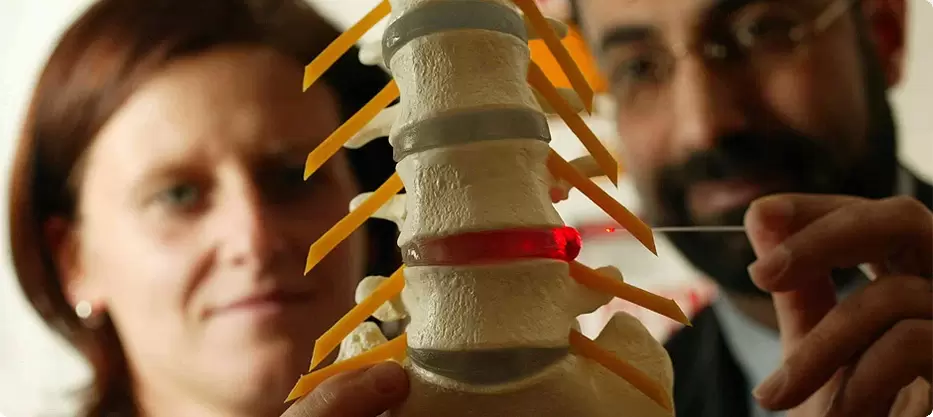
Diagnostics
From all this it is clear that osteochondrosis is a chameleon disease.Due to the similarity of symptoms, it can be easily confused with cerebrovascular accident, hypertension, myocardial infarction, angina pectoris and neurotic disorders.That is why, to make a correct diagnosis, a complete and comprehensive diagnosis is needed to correctly determine the symptoms and treatment of osteochondrosis.
This diagnosis, in addition to the traditional survey and clarification of the patient's complaints, should include a medical examination and special research methods.These methods include x-ray of the spine and ultrasound of the internal organs.Recently, computer and magnetic resonance imaging have been successfully used to diagnose osteochondrosis.
Treatment
Therapeutic tactics for osteochondrosis include the use of:
- Medicines
- Massage
- Physiotherapy procedures
- Therapeutic physical education (physical therapy)
- Manual therapy
- Acupuncture.
Pharmacological treatment of osteochondrosis is mainly aimed at relieving pain and eliminating inflammatory processes in the nerve roots.For this purpose, NSAID drugs are used.In various combinations, these drugs have found wide use in the form of ointments, injections and tablets for the treatment of osteochondrosis.It should not be forgotten that these drugs negatively affect the liver, stomach and intestines.In this way, they can aggravate metabolic disorders in osteochondrosis.Blocks with local anesthetics relieve pain well.True, the effect of these drugs is short-lived and in no way affects the course of osteochondrosis as a whole.
It is possible to improve metabolic processes locally and in the organism with the help of drugs such as chondroprotectors, immunostimulants, vitamins and minerals.Chondroprotectors are used in tablets, ointments and ampoules.Among general strengthening agents, vitamins C and group B are used in combination with minerals.In this regard, calcium-based preparations are preferable.In fact, contrary to some erroneous statements, the basis of osteochondrosis is not excess, but precisely deficiency of calcium.
After successfully removing a flare-up, physiotherapeutic procedures, massage and physical therapy are indicated.As physical procedures, calcium electrophoresis, hydrocortisone phonophoresis, amplipulse and paraffin treatment are used.All these measures are aimed at eliminating pain and inflammation in the nerve roots, ligaments and muscles.Massage for osteochondrosis is carried out according to generally accepted methods.The massage area is selected based on the location of osteochondrosis.Expanding range of motion is achieved with the help of physical therapy.Initially, in the acute phase, there are practically no dynamic loads.The patient is constantly in the optimal position.At this time, it is advisable to wear immobilizing devices: a lumbar corset, a Shants cervical collar.As the exacerbation subsides, the volume and duration of movements during physiotherapy sessions increase.
Recently, non-traditional treatment methods have been used in the treatment of osteochondrosis: acupuncture, manual therapy, osteopathy.Acupuncture is an effect on special biologically active points located along the spine, ears, hands and feet.With manual therapy, the normal position of the vertebrae and intervertebral discs is restored through the manual action of a specialist's hands.And during osteopathy, the structural integrity of the musculoskeletal system is guaranteed using specific techniques.In the absence of the effect of conservative measures for the treatment of osteochondrosis, persistent pain and complications, surgical intervention is indicated.The pathologically displaced disc is removed.Currently, microdiscectomy is performed for this purpose - endoscopic removal of a displaced disc.